The Trouble With "Stakeholders"

A Neutral Word That Isn't

In conservation, stakeholder is a word that sounds responsible. It carries the tone of inclusion, the posture of care, the suggestion that many voices matter. On the surface, it appears benign—someone with a stake in a plan, a future, an outcome.
But listen more closely and the word begins to reveal its limits. A stakeholder is not a leader. Not a decision-maker. Not an author of the plan itself. A stakeholder is someone who has a stake in something designed by someone else. That distinction is subtle, bureaucratic, and easy to overlook, but it carries a long and consequential shadow.
Where Plans Begin—and Who Joins Later
Conservation is built on plans. Marine spatial plans, recovery plans, management plans, action plans. They are drafted in conference rooms, shaped through institutional priorities, circulated as PDFs, refined through comment periods, and finalized with signatures that rarely belong to the people most entangled with the places in question. Those people are invited in later. They are consulted, engaged, included. They are labeled stakeholders—a role defined not by agency or authority, but by proximity to decisions already underway. The pen, meanwhile, remains in the same hands.
The Inheritance We Rarely Name
The language of stakes and holders did not emerge from traditions of care, kinship, or reciprocity. It comes from the worlds of property, ownership, risk, and wager. Stakes are planted. Claims are asserted. Value is assigned by those with the authority to define it.
In colonial systems, land and water were not stewarded so much as claimed, and people already in relationship with those places were recast as obstacles, beneficiaries, or—at best—interested parties. When conservation adopts the language of stakeholders, it often inherits this framing without acknowledging it: power plans, others respond.
Consultation is Not Shared Authority
This dynamic becomes clearest in the difference between consultation and co-creation. Consultation happens after the scaffolding is built, when the fundamental structure is already in place. Co-creation begins before the first line is drawn, when authority is shared rather than deferred.
Conservation culture frequently celebrates listening sessions and public comment periods as evidence of progress, even as decision-making power remains unchanged. The process feels participatory. The outcome remains hierarchical. Stakeholders are thanked, and the plan proceeds.
When Being "Informed" Wasn't Enough: Galapagos
The collapse of the Galápagos sea cucumber fishery in the 1990s and early 2000s offers a stark illustration of what happens when stakeholder models substitute for shared governance. Faced with a rapidly expanding export market, Ecuadorian authorities introduced quotas, seasonal closures, and enforcement measures designed largely by scientists and policymakers. Fishers were informed of the rules, occasionally consulted, and formally recognized as stakeholders in the management process.
They were not co-creators.
Local fishing communities had little role in setting harvest limits, defining recovery targets, or designing enforcement systems that reflected on-the-water realities. As restrictions tightened without shared authority or trust, compliance eroded. Illegal fishing increased. Enforcement escalated. Conflict between communities, conservation actors, and the state intensified. Despite increasingly sophisticated science and stricter controls, the fishery repeatedly collapsed.
The failure was not ecological ignorance. It was a governance failure. Fishers were treated as variables to manage rather than partners with authority. Being informed about decisions made elsewhere did not produce stewardship—it produced resistance. The lesson that emerged, painfully and publicly, was that regulation without shared authorship invites collapse.
When Communities Lead From the Start: Kaʻūpūlehu, Hawaiʻi
The Kaʻūpūlehu “Try Wait” initiative on the west coast of Hawaiʻi Island offers a clear example of conservation shaped by community leadership and grounded in traditional knowledge and cultural priorities. For decades, long-time residents and kūpuna (elders) observed serious declines in reef fish populations, coral cover, and subsistence resources — trends that state management alone had not reversed. Rather than waiting for an external plan, the Kaʻūpūlehu Marine Life Advisory Committee (KMLAC) — composed of families with ancestral ties to the ahupuaʻa, local cultural organizations, and other community members — developed a community-based proposal to allow reef ecosystems to recover while simultaneously crafting a sustainable management strategy built by and for the community.
In 2016, with widespread local support, the State of Hawaiʻi approved the committee’s rule amendment to create the Kaʻūpūlehu Marine Reserve, initiating a 10-year rest period on nearshore fishing across a 3.6-mile stretch of reef known locally as “Try Wait.” During this rest period, community members worked with scientists using participatory tools to document ecological change and co-develop a long-term fisheries management plan that reflects both local and traditional ecological knowledge and scientific evidence.
Early ecological monitoring indicates promising signs of recovery: increases in fish populations inside the rest area (e.g., wrasses up 62% and parrotfish up 30%) alongside stable or improving coral cover compared to adjacent areas where fishing continues. These trends suggest that community-driven harvest restrictions and collaborative planning are supporting ecological resilience and future sustainable use.
The Try Wait approach demonstrates how conservation outcomes can differ when local knowledge, cultural stewardship, and community priorities shape both the goals and the mechanisms of resource management, rather than serving only as inputs into externally designed plans.
When Stakeholders Are Treated as Obstacles: Deep-Sea Mining in Indigenous Territories
If Kaʻūpūlehu shows what becomes possible when communities lead, the current push for deep-sea mining in Indigenous and territorial waters shows the opposite: how the stakeholder mindset becomes a contemporary instrument of colonialism.
In debates over deep-sea mining—particularly in the Pacific—companies routinely acknowledge Indigenous peoples as stakeholders while proceeding as if decision-making authority rests elsewhere. The framing is familiar. Communities are “engaged.” Concerns are “heard.” Cultural connections are “noted.” And yet, the central premise remains untouched: extraction is assumed to be inevitable, and the only open question is how to manage its social and environmental fallout.
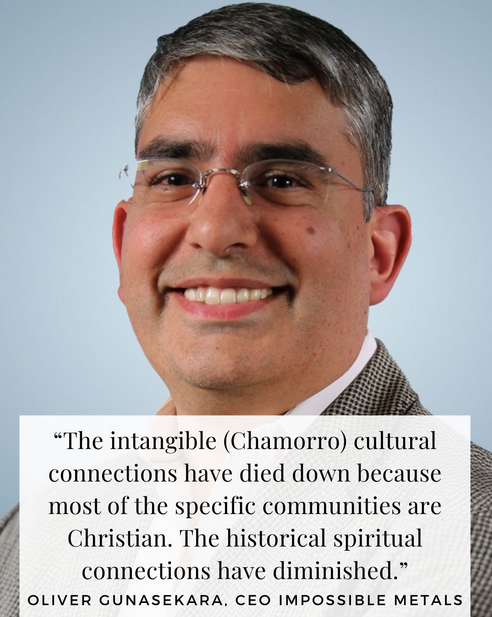
This logic has been voiced explicitly by figures such as Oliver Gunasekara, CEO of Impossible Metals, who has publicly downplayed Indigenous relationships to the deep ocean while emphasizing global “need,” technological precision, and the promise of minimal impact. In this framing, the seabed is rendered as an abstract resource field—valuable because of what it can supply to distant markets—while ancestral, cultural, and spiritual ties to those same waters are treated as secondary considerations or emotional overlays.
This is not a failure of consultation. It is a failure of structure.
Indigenous Pacific peoples are not disconnected observers of the deep ocean. Their cosmologies, genealogies, and navigational traditions extend vertically as well as horizontally—linking surface waters, seamounts, abyssal plains, and the living beings that inhabit them. These are not symbolic relationships. They are systems of knowledge, responsibility, and restraint developed over millennia. To acknowledge these communities only as stakeholders is to reduce sovereign relationships to feedback mechanisms.
The stakeholder model allows extraction plans to be drafted first—often by corporations headquartered continents away, operating under legal regimes designed without Indigenous consent—and only then presented to affected peoples for response. Participation is invited, but authorship is not. Objection is permitted, but veto power is absent. The underlying assumption remains that the project will move forward, and that Indigenous peoples must negotiate the terms of their own dispossession.
This is modern colonialism with updated language.
Where colonial regimes once claimed land through doctrines of discovery and terra nullius (the 19th-century Guano Islands Act offers a particularly revealing U.S. example), contemporary extractive projects claim legitimacy through sustainability narratives and technological sophistication. Robots replace pickaxes. Environmental impact statements replace imperial charters. But the power geometry remains intact: those with capital and permits decide; those with ancestral ties are asked to adapt.
The contrast with Kaʻūpūlehu is instructive. In Hawaiʻi, the community decided whether to pause extraction, how long that pause would last, and under what conditions fishing might resume—if at all. In deep-sea mining, Indigenous communities are asked to comment on projects whose existence they did not authorize and whose risks they will disproportionately bear.
Calling this arrangement “stakeholder engagement” does not make it equitable. It makes it legible within systems already optimized to exclude shared authority.
If conservation and sustainability frameworks are serious about justice, then deep-sea mining reveals the limits of their current vocabulary. You cannot reconcile extractive inevitability with Indigenous sovereignty by adding listening sessions. You cannot correct colonial power dynamics by polishing participatory language. And you cannot claim ethical legitimacy while treating ancestral oceans as resources awaiting optimization.
In this context, stakeholder is not a neutral term. It is a mechanism that preserves control while projecting inclusion. And until that structure changes—until rights-holders are recognized as decision-makers rather than consultees—deep-sea mining will remain less a test of technology than a test of whether conservation is willing to confront its own colonial inheritance.
Together with Galápagos and Kaʻūpūlehu, deep-sea mining exposes the same fault line: conservation succeeds or fails not by how well people are consulted, but by whether they are trusted to decide.
The Difference That Decides Outcomes
Galápagos, Kaʻūpūlehu, and today's deep-sea mining debates unfold in different geographies and political contexts, but the contrast between them is instructive. In one, people were treated as stakeholders in a plan they did not author. In another, communities were architects of the intervention itself. In the third, indigenous peoples are acknowledged as stakeholders while extraction is treated as inevitable.
One model relies on enforcement and persuasion. Another relies on ownership and care. The last preserves control while performing inclusion.
Stakeholder models manage reaction.
Co-creation models generate responsibility.
Words That Point Toward a Different Structure
There are other words available to us, and they point toward a different configuration of power. Stewards. Rights-holders. Knowledge-holders. Co-governors. Leaders. These are not semantic upgrades or branding exercises. They are structural commitments.
They imply shared authorship rather than symbolic inclusion. They require conservation and sustainability efforts to begin with those most entangled with place, rather than arriving there after decisions have already been shaped, investments made, and trajectories locked in.
Power Is an Ecological Variable
Conservation is comfortable talking about ecosystems, feedback loops, and resilience. It is far less comfortable talking about power. Yet power shapes outcomes as surely as temperature or pH.
When we ignore it, we design interventions that look elegant on paper and fracture in practice—or scale up extraction while calling it responsible. Revising our language is not about political correctness or optics. It is about structural honesty. Words signal who belongs at the table, who sets it, and who is expected to adapt once the decisions are made.
Beyond Being Consulted
If conservation is serious about resilience, equity, and durability, then stakeholder cannot be where the conversation ends. The term may signal awareness, but it stops short of accountability. It acknowledges impact without redistributing authority. It recognizes presence without granting power—whether the issue is fisheries collapse, reef recovery, or the proposed mining of ancestral seabeds.
Moving beyond a stakeholder mindset requires changing how conservation begins. It means starting with leadership rooted in place rather than plans drafted elsewhere. It means shifting from consultation to co-authorship, from engagement to governance, from managed participation to shared authority.
Practically, this requires recognizing rights-holders rather than interested parties; funding processes that allow communities to define priorities before proposals are written; governance structures that place local and Indigenous leaders in decision-making roles from the outset; and timelines that honor relationship-building rather than rushing consensus to meet external demands.
The future of conservation will not be secured by how many voices are consulted, but by how many are trusted to lead.


Comments